
How to Read Chinese Porcelain Marks for Sellers in Florida

Chinese porcelain turns up often in South Florida homes, waterfront condos, inherited collections, and long-held estates. For families and executors, the first clue is usually on the underside. Chinese porcelain marks on the base can point to age, maker, reign period, quality, or sometimes a later reproduction. At Elite Auctioneers, a South Florida auction house based in West Palm Beach with more than 40 years of experience, we have seen how one overlooked vase, bowl, or jar can change the direction of an estate evaluation.
A mark alone does not prove value. It is a clue. The real answer comes from reading the mark together with the clay, glaze, foot ring, decoration, condition, and market demand.
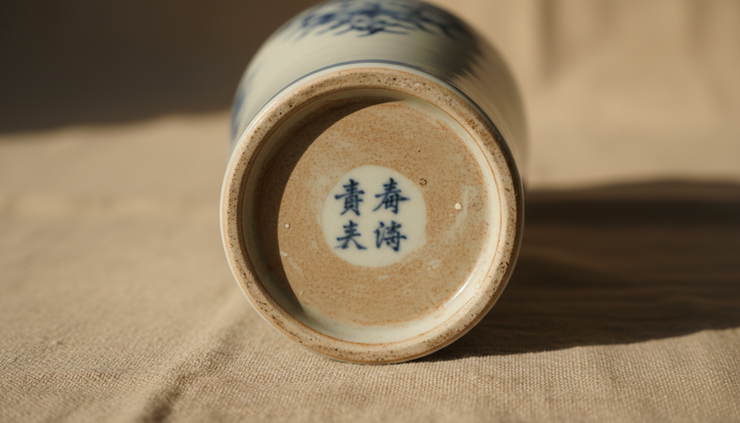
Why the Base Matters More Than the Front
The front of a porcelain piece is made to impress. The base often tells the truth.
A trained appraiser looks at several details at once:
The mark
The writing, layout, color, brushwork, and placement can offer clues.
The foot ring
Older porcelain often has a carefully cut foot with natural wear. A harsh, bright, or machine-perfect foot can raise questions.
The clay body
The exposed clay at the base may show color, texture, and density.
The glaze edge
Where the glaze stops near the foot can reveal how the piece was made.
Natural wear
Genuine age often appears as soft, uneven wear from use and handling, not artificial scratches.
This is why experienced auction specialists turn a piece over before making assumptions. A beautiful dragon jar or famille rose plate may look impressive from across the room, but the underside can give a more useful first read.
Learning how to tell if Chinese porcelain is real starts with slowing down. Do not rely on one feature. A reign mark, fine painting, or crackled glaze may be promising, but each needs to agree with the rest of the object.
What are Chinese porcelain marks
Chinese porcelain marks are inscriptions found on the base or, less often, on another part of a porcelain object. Many refer to an imperial reign period, a workshop, a hall, a studio, or a later tribute to an earlier style.
Common types include:
Six-character reign marks
These often name a dynasty and emperor, such as a mark in the style of the Kangxi, Yongzheng, or Qianlong periods.
Four-character marks
These may be abbreviated reign marks or marks of praise.
Seal script marks
These use a formal, squared script that can be harder to read without experience.
Hall marks
These may refer to a private studio, collector’s hall, or specific place of production.
Most marks are read top to bottom and right to left, often in two vertical columns. A six-character mark may begin with the dynasty, continue with the emperor, and end with the phrase meaning “made during the reign of.”
Chinese porcelain marks can appear in underglaze blue, iron red, gilt, impressed form, or incised form. The style of writing matters. So does the way the mark sits under or over the glaze.
A weak or awkward mark does not always mean a piece is worthless. Some authentic pieces have casual marks. Some valuable export pieces have no mark at all. The mark is only one part of the story.

Reign Marks Are Clues, Not Guarantees
One of the most common surprises for sellers is this: a Qianlong mark does not automatically mean the piece was made during the Qianlong reign.
Chinese porcelain makers often honored earlier periods by using older reign marks. This was done for centuries. Some pieces are genuine antiques from a later period. Others are modern decorative copies.
For example, a vase with a Qianlong-style seal mark could be:
An imperial-period object
A later Qing dynasty piece made in that style
A Republic period copy
A modern reproduction
A decorative piece made for export
The difference can be significant. It can affect whether the object belongs in a fine Asian art auction, a general estate sale, or a decorative category.
This is where hands-on evaluation matters. Photographs help, but texture, weight, translucency, and glaze quality are easier to assess in person. Elite Auctioneers often begins with images, then recommends the next step if the piece appears promising.
Red Flags That Help Spot Reproductions
For families sorting an estate, the goal is not to become a porcelain scholar overnight. The goal is to avoid selling too quickly or assuming too much.
In the Red Flags section of any evaluation, appraisers look for signs that help answer how to tell if Chinese porcelain is real.
Watch for these issues:
A mark that looks too clean
Bright, sharp, perfectly centered marks can be suspicious if the rest of the base shows no real age.
Artificial staining
Tea-colored residue, darkened cracks, or dirt rubbed into the foot may be used to imitate age.
Heavy, lifeless painting
Older hand painting often has rhythm and confidence. Reproductions may look stiff or crowded.
Wrong wear pattern
A base with random scratches but no natural contact wear may not match the claimed age.
Modern glaze feel
Some newer pieces have a glassy, slick surface that differs from older porcelain.
Mismatched style
A mark from one period paired with decoration from another can signal a later copy.
Still, red flags are not proof by themselves. Some authentic pieces were heavily restored. Some later pieces still have strong market value. A careful appraisal weighs the whole object, not just one warning sign.
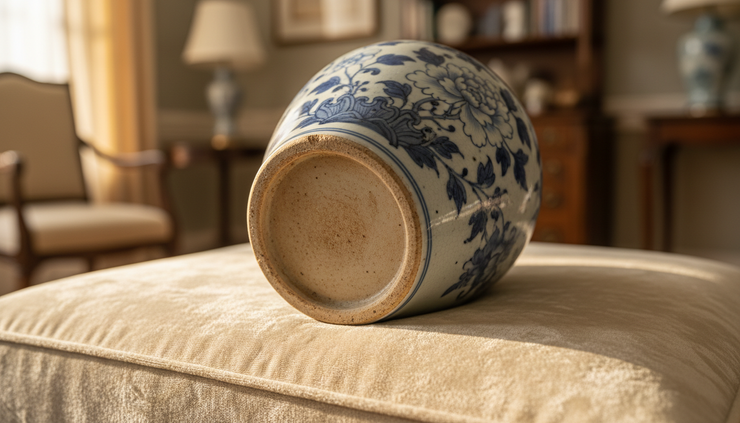
How to Photograph a Piece for an Appraisal
Good photos make the first review much easier. For a Chinese antique appraisal, clear images can help an auction house decide whether the item needs an in-person inspection.
Send photos of:
The full front of the piece
The back
The underside and mark
A close-up of the foot ring
Any chips, cracks, repairs, or old labels
A ruler or common object for scale
Use natural light when possible. Avoid flash glare. Place the item on a plain surface so the shape and color are clear.
Do not clean the piece aggressively before taking pictures. Wiping away dust is fine. Scrubbing, soaking, or using chemicals can damage surfaces, labels, gilding, or old repairs.
A free appraisal can be a helpful first step when an estate includes porcelain, jade, bronze, scrolls, or other Asian works of art. Even if a piece is not museum quality, it may still attract bidders when presented to the right audience.
Auction or Dealer When You Want to Sell
When deciding where to sell Chinese antiques in Florida, sellers often compare a direct dealer offer with an auction.
A dealer may offer speed and certainty. The price is usually wholesale because the dealer must allow room for resale.
An auction creates competition. If several collectors want the same piece, bidding can exceed expectations. Auction also gives transparency through public results and documented sale records.
For rare or uncertain pieces, auction can be especially useful. A single private offer may not reflect full market interest. When properly cataloged and promoted, strong porcelain can reach regional, national, and international buyers.
The best choice depends on condition, quality, timing, and the seller’s goals. An experienced auction house can explain the likely path before anything is consigned.
What Elite Auctioneers Looks For
Elite Auctioneers evaluates Chinese porcelain within the larger context of an estate. A porcelain vase may sit beside Japanese screens, carved furniture, paintings, jewelry, silver, or decorative art. Seeing the collection together can help identify patterns of taste, travel, and collecting history.
The team looks for:
Quality of potting and form
Decoration and brushwork
Glaze color and surface
Mark type and placement
Age indicators on the base
Provenance, if available
Condition and restoration
Current buyer demand
Based in West Palm Beach, Elite Auctioneers serves sellers who need clear guidance, not pressure. That includes heirs managing a family home, executors working through an estate, and collectors ready to sell selected pieces.

Get a Trusted Opinion Before You Sell
If Chinese porcelain marks appear on a vase, bowl, charger, or jar in an estate, take a few careful photos before making decisions. The mark may be useful, but the full object matters more.
For a Chinese antique appraisal, contact Elite Auctioneers and ask about a free appraisal for porcelain and Asian art. As a South Florida auction house with decades of experience, the team can help identify promising pieces and explain whether auction makes sense.
Families looking to sell Chinese antiques in Florida do not need to guess based on internet searches alone. Start with the base, photograph the details, and get an expert review before you let a valuable piece leave the house.


Comments